

Big anthem, quiet ballad, and a debut album still to come
Long before Wayne Banks released a note under his own name, he was the bass player standing just off to the side, touring with Robin Gibb, recording with Saxon, working the circuit with The Classic Rock Show. That’s a long apprenticeship by any measure, and it shows in the confidence of his first two solo singles, ‘World We Share’ and ‘Cold River’. With debut album ‘Ex Libris Wayne Banks’ due this November, we wanted to go back to the beginning and trace how a career spent supporting other artists eventually led Banks to step out on his own.
FACEBOOK | INSTAGRAM
1. You’ve described your sound as blending alternative rock, folk and pop with a punk edge. How do you decide which of those influences leads on a given song?
Initially, I don’t really decide which influence takes the lead. The song usually decides that for me.
When an idea comes to me, or more often just a snippet of a song, I can usually hear the finished version in my head straight away, complete with full production, orchestral arrangements, bells and whistles, the whole works! I sometimes wish I could just plug a recording studio directly into my head. It would save an awful lot of time and effort!
The first thing I do is record a voice note and try to capture as much of what’s going on in my head as possible, before I even pick up an instrument and start working out how to play it. From there, it really depends on how I eventually approach the idea, assuming I get around to it at all! I have thousands of unfinished voice notes sitting on my phone.
What’s quite interesting is that an idea can completely change direction depending on how I revisit it. I’ve had things that originally sounded like dance anthems in my head turn into country ballads simply because I’ve picked up an acoustic guitar the next time I’ve played around with them.
I think that’s probably why the album has quite a varied sound. I don’t tend to set out with a particular genre in mind. I just follow the song and see where it takes me.
2. ‘World We Share’ and ‘Cold River’ sit at pretty different ends of your range, one communal and anthemic, the other intimate and restrained. Do you consciously plan that contrast, or does each song simply demand its own treatment?
No, I didn’t consciously plan that contrast at all. As you say, I think each song demands its own treatment, and I tend to follow my instincts rather than set out with a particular sound or arrangement in mind.
‘World We Share’ naturally lent itself to something much bigger and more anthemic, whereas ‘Cold River’ felt like a much more intimate and stripped-back song.
Interestingly, the lyrics to ‘World We Share’ took quite a few rewrites to get right. The original opening line was “Laura was a city girl”, which actually meant absolutely nothing! It was simply the first thing that came into my head when I was working on the initial verse melody. The words fitted the melody and rhythm perfectly, though, and the prosody — the way the words sat against the music — worked really well. That meant I became quite attached to the line, even though I hadn’t really thought about what it was saying.
The problem was that I already had the chorus line “Deny us if you dare”, which I really liked, but I couldn’t find a way to make the original verse and chorus sit together in any meaningful way. I kept trying to make the lyrics work, but I was probably going down the wrong road for quite a while.
Eventually, I had to step back and think about what I was actually trying to say. Then, one day, while doing a rather mundane household chore, the rest of the chorus line, “our place in the world we share”, just popped into my head!
That made me stop and think about what those words actually meant to me. I went back to a songwriting rule I’ve always believed in: write about what you know. I started drawing on my own experiences of growing up on a council estate, believing in yourself even when you might not have had many opportunities, and the idea that everyone’s voice and opinions deserve to be heard. That eventually gave the song its identity and its meaning.
I think that’s part of the enjoyment and frustration of songwriting. Sometimes you have the melody and the music, and even the words can sound right, but it takes a while to discover what the song is really about. Ultimately, I don’t want to force songs into a particular style or formula. I just try to find what feels right for each one
3. You’ve said ‘Cold River’ arrived almost fully formed once you heard James Cole’s guitar part. How do you know when a song is finished versus when it still needs work?
Ha! Funny you should ask this. If it wasn’t for my co-producers Steve Parry and James Cole, I’d probably still be ‘finishing’ these songs!
My problem is that I’ll start with an initial idea for a song, but then all sorts of other ideas start spinning off from it. I can hear different possibilities, different arrangements, little additions and changes, and before long I’m in danger of taking the song in all sorts of directions. Sometimes you just have to know when to stop and leave it alone!
I think songwriting really has two parts: inspiration and craft. I don’t tend to have a problem with the inspiration side. Ideas come to me quite naturally, and quite often I can hear a song almost fully formed in my head. It’s the craft part — developing those ideas, refining them and knowing when they’re actually working — that’s a constant learning process for me.
That’s where having the likes of Steve and James involved was invaluable. They brought a fresh pair of ears, a different perspective and, probably most importantly, the ability to recognise when a song had reached the point where it was finished. I’m not sure I’ll ever be particularly good at that myself!
4. The river as metaphor runs right through ‘Cold River’, struggle, presence, staying close without trying to fix things. Was that image there from the start, or did it emerge through the writing process?
The opening verse of ‘Cold River’, both the words and melody, came to me almost instantly. I then built the rest of the lyrics around wherever that initial spark seemed to be leading me. So the river metaphor and its meaning really emerged through the writing process rather than being something I’d planned from the start.
I don’t have any fixed rules when it comes to songwriting. In fact, the chorus melody came about quite unexpectedly. I was looping a section of the track and playing a bass solo over it, and I liked what I was playing so much that I turned it into the main vocal melody!
I think you just have to follow those little sparks of inspiration and see where they take you.
5. A lot of your lyrics come from observing real life around you. How do you turn something you’ve witnessed or lived through into a song without it feeling too literal?
I consciously try to write lyrics that feel universal, so that anyone can relate to them, while still drawing on my own experiences and things I know. For example, the lyrics to ‘Cold River’ were inspired by three different personal situations, but the underlying message is simply about being there for someone. I like the idea that a song doesn’t have to tell one specific, literal story; it can bring together different experiences and leave room for people to find their own meaning in it.
6. You’ve spent your career as a supporting musician for other artists’ visions. How different is the decision-making process now that every choice on a track is yours to make?
To be honest, not that much has changed in terms of the creative process, as I’ve been writing songs for years, usually as part of a band. The difference now is that I don’t feel tied to the restraints of a band’s particular genre and have the freedom to take things in my own direction. Working alongside some well-known artists has also given me more exposure and some great experience, which has been invaluable. I think it’s more of a natural progression than a complete change in the way I work.
7. Recording on the Wirral and mastering at Abbey Road, how much does the physical space and process of recording shape the emotional tone of a finished song for you?
For the majority of the album, I’d already recorded quite detailed demos at my home studio in Nottingham, so the emotional tone and identity of the songs had largely been established before we went into the studio. Some of those original demo parts actually made it onto the finished album, and we built around them, which I think helped preserve some of the original feeling and character of the songs.
That said, recording at Steve Parry’s Old School Recording Studio on the Wirral was a fantastic experience in its own right. A big shout out to Steve and James Cole, who both put an enormous amount of work into the album, sometimes even when I wasn’t there. Steve played drums, piano, keyboards, synths and backing vocals, as well as engineering and mixing the record. They were both instrumental in bringing everything together.
Being away from home allowed me to completely immerse myself in the music without the usual distractions of everyday life. Having a dedicated space and deadlines to work towards also brought a real focus and momentum to the sessions. It was a pleasure working with Steve and James, and I think the atmosphere and creative energy of the studio definitely became part of the album’s character.
Having the album mastered at Abbey Road was another very special part of the journey. So, while I think the emotional foundations of the songs were already there, the people, places and experiences along the way all played their part in shaping the finished record.
8. Themes of class, community and standing by one another run through your work. Do you see ‘Ex Libris Wayne Banks’ as a continuation of those ideas, or is the album taking them somewhere new?
I think it’s a continuation of some of those ideas, but there are also a lot of songs dealing with relationships, love, relationship difficulties, being in a band, unrequited love and just general human experiences that I think most people can relate to in some way.
Ultimately, I suppose the album is a collection of observations and experiences, some personal and some imagined, but all rooted in human relationships and the way we navigate life.
9. What’s a piece of advice from your years working with artists like Robin Gibb that you find yourself returning to now as a solo artist?
One piece of advice from Robin that has always stayed with me was to simplify what I was writing about. He gave me the example of writing a song about the sun rising. You don’t necessarily have to take it through the whole day, to midday and then sunset. Sometimes it’s better to capture that one moment or feeling and explore it.
He also pointed out how many Bee Gees songs had very simple, often one-word titles, such as ‘Guilty’ or ‘Tragedy’. The idea was to take a single word, thought or sentiment and build a song around it, rather than overcomplicate things.
It’s something I still think about when I’m writing. Sometimes the simplest ideas can make the most powerful songs, and I’ve learned not to feel that I have to say everything in one song.
10. If someone’s coming to your music for the first time through ‘Cold River’, what do you want them to carry with them into the rest of the album?
I suppose I’d want people to carry an open mind and a sense of curiosity into the rest of the album. ‘Cold River’ is quite a good introduction to one side of what I do, but it doesn’t necessarily represent the whole record. There are a few songs that sit in a similar acoustic, folk-rock territory, but there’s also quite a bit of variety, with some much more upbeat, guitar-driven alternative rock songs and even some dance style pop songs.
I grew up loving all sorts of music, and I think those different influences naturally find their way into the album. So I’d hope that if someone connects with ‘Cold River’, they’re curious enough to stay with it and discover the other sides of the record. I think there’s a little something for different moods and tastes, and ultimately I’d like people to enjoy the journey rather than know exactly what to expect.
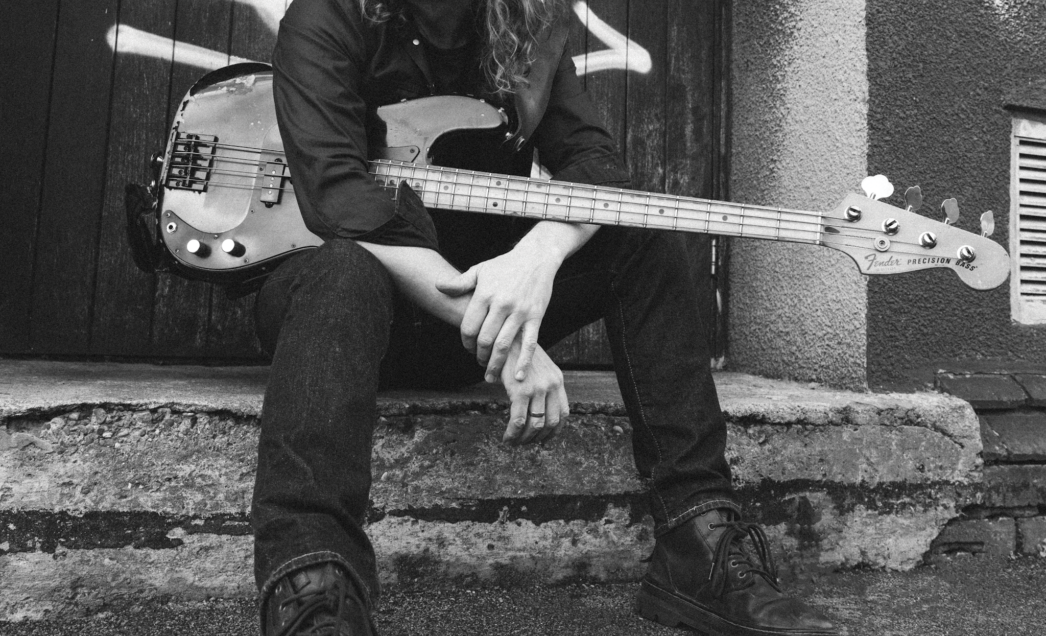
Wayne Banks – Photography by Izzy Rubin-Burnett – Edited by Amelia Banks

Leave A Reply