
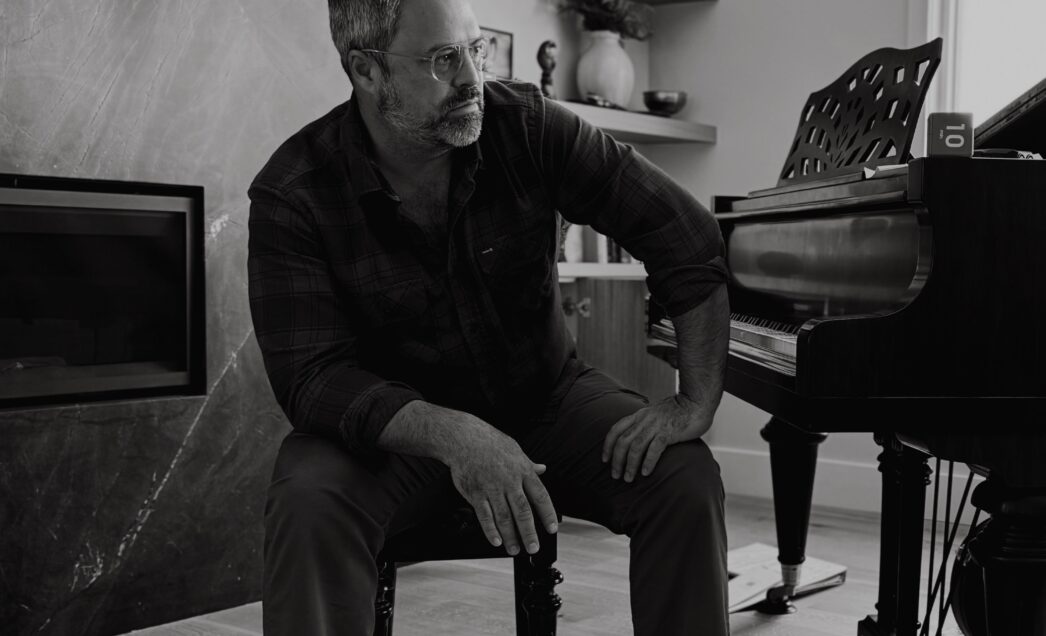

Reese Harper’s reckoning came in threes: A divorce, the loss of his religion, the forced liquidation of a software startup he had spent nearly a decade building. What do you do when the architecture of your adult life collapses around you? Harper drove to the mountains. He sat down at an upright piano in a cabin, and he started to play.
“At first, it was rocky,” he recalls. “I would sit down and search for sounds that felt good in my hands. Sometimes I would land on a small phrase that broke up the pain for a few seconds. Sometimes it just gave shape to the silence in the room.”
What he found inside this silence became A Waltz in the Woods, his debut album and one of the most quietly arresting instrumental records to emerge from that specific experience of starting over.
Harper is not a newcomer to the piano. He’s been playing since childhood, carrying a private relationship with the instrument through decades of building companies in the financial advisory and technology industries. Music remained mostly his own during those years, something returned to at night, early in the morning, or in the mountains surrounding Big Cottonwood Canyon. It was never meant for anyone else. Until it was.
What makes A Waltz in the Woods so disarming is precisely that origin. These are not compositions written to impress. They are recordings made to survive. Blending felt piano with cinematic minimalism and subtle analog textures, the album moves through Americana, gospel harmony, and the improvisational spirit of music made in living rooms rather than studios, because most of it was. Vintage pianos. Analog synthesizers. The sound of a person thinking out loud in the only language that was still available to him.
The album’s title carries its own quiet poetry. A waltz is structured, measured, meant to be danced to with someone else. The woods are where you go alone. Harper holds both ideas at once and lets them move together without resolution. That tension is the record.
In an era that rewards productivity, reinvention narratives, and the clean arc of a comeback story, A Waltz in the Woodsrefuses all of it. There is no triumphant resolution here, no moment where the darkness lifts and the lesson is learned. Instead there is something rarer: the honest sound of a person finding their way back to themselves, one phrase at a time. Music, as Harper himself puts it, for people who are tired from being strong.
It turns out that’s a great many of us. A Waltz in the Woods is out now. Reese Harper’s essay on the making of the album is available to read here.


Leave A Reply